

 iscover
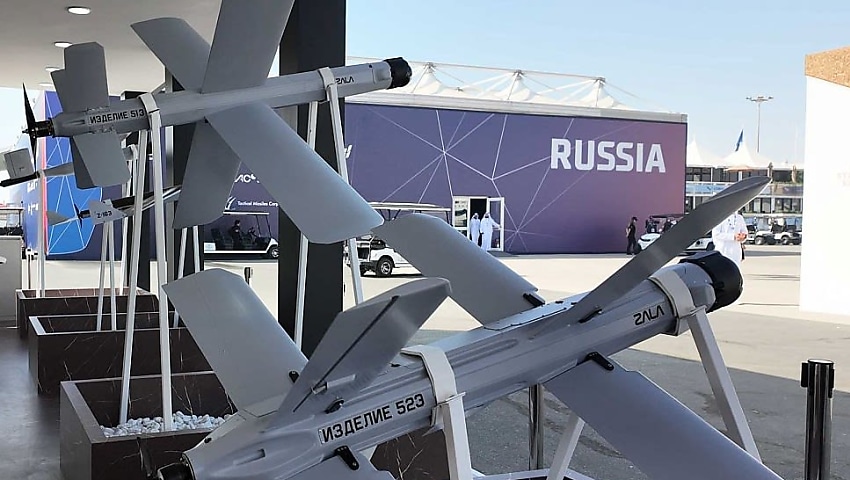
On the modern battlefield, technology developed by Iran, Russia and China has often been characterised as being copied or adapted from Western designs.
We now know that many of these modern systems, including controversial kamikaze drones and widely sanctioned munitions, have been quietly developed over the last decades without the interference of international or domestic oversight. Regimes established a military goal, drew up or adapted designs and the work was completed regardless of cost.
From the recent conflicts in the Middle East, it now appears that Iran spent much of its development on ballistic missile technology and inexpensive-attritable kamikaze drones. The occupation of Ukraine by Russian forces continues to make headlines with deployment of thermobaric munitions and landmines among other internationally shunned weapons. The People’s Republic of China went further with hypersonic glide vehicle weapons, anti-satellite systems and anti-ship ballistic missiles among its expanding arsenal.
This is the reality of the modern battlefield. The pace of technology is accelerating and with it, the development of Western adversaries like Iran, Russia and China. The uncomfortable truth is that the technologies being developed by Western adversaries raise legitimate ethical and strategic concerns, but just ignoring them, refusing to develop similar capabilities or possible counter programs due to ethical concerns would be a serious mistake.
More concerns, not less
It’s clear that into the future, we can look forward to seeing increased variants of self-targeting autonomous drones, anti-satellite weapons, incendiary munitions or hypersonic systems developed exclusively by authoritarian regimes, not less.
To maintain a level playing field in deterrence and technological parity, the United States, Australia and allies should be investigating these controversial weapons to understand how they work and how they are produced. Any international regulation should not come as the primary goal but rather as a secondary thought because that ship has already sailed for most of the world.
Deterrence relies on the idea that potential adversaries will avoid conflict if they know the costs will be too high. If rival states possess powerful new capabilities that Western nations lack, this balance quickly erodes.

Hypersonic weapons illustrate this danger clearly. Their speed and manoeuvrability reportedly challenges existing missile defence systems and reduces the time to respond to an attack. Refusing to develop comparable systems would not make the world safer – it would simply leave Western countries vulnerable and surrender technological leadership to rival powers.
In addition, if Western nations develop advanced hypersonic weapons, anti-satellite systems or autonomous drone capabilities, they will be better positioned to negotiate international agreements that limit their use. In contrast, refusing to develop these weapons while others deploy them would reduce the likelihood of arms control. After all, when countries lack comparable weapons or understanding of such systems, they have little leverage in negotiations involving them.
This is not a new issue, but more truthfully, a conveniently forgotten problem that has persisted for some time. Thermobaric weapons and flamethrowing devices are a good illustration of this point; they are often portrayed as uniquely inhumane in military conflict but their legality has already been written off as “anti-fortification” or “chemical clearance” weapons by Russia and China, as opposed to their effective use against personnel.
Their supposed use to destroy fortified positions, such as bunkers and underground tunnels that are difficult to neutralise with conventional explosives, is now only a thin veil obfuscating highly capable munitions and systems which can be adapted to many different war-time purposes. Such systems can undoubtedly provide military advantage against those nations that have elected to “conveniently forget” development and understanding.
Final thoughts
The reality of the modern battlefield is that technological innovation in warfare rarely stops simply because countries choose not to participate or because the United Nations issues a sternly worded statement about specific warfare systems.
International powers will continue to develop new weapons regardless of ethical restraint. The question is not whether these technologies will exist, but who will shape their development, use and understanding.
For the United States, the United Kingdom, and Australia, the responsible path forward is not technological self-denial but strategic engagement.
Developing our own versions of controversial systems can preserve deterrence, maintain military understanding and help shape the future rules of warfare and negotiation rather than being forced to live under rules written by others.

Want to see more stories from trusted news sources?
Make Defence Connect a preferred news source on Google.
Click here to add Defence Connect as a preferred news source.