

 iscover





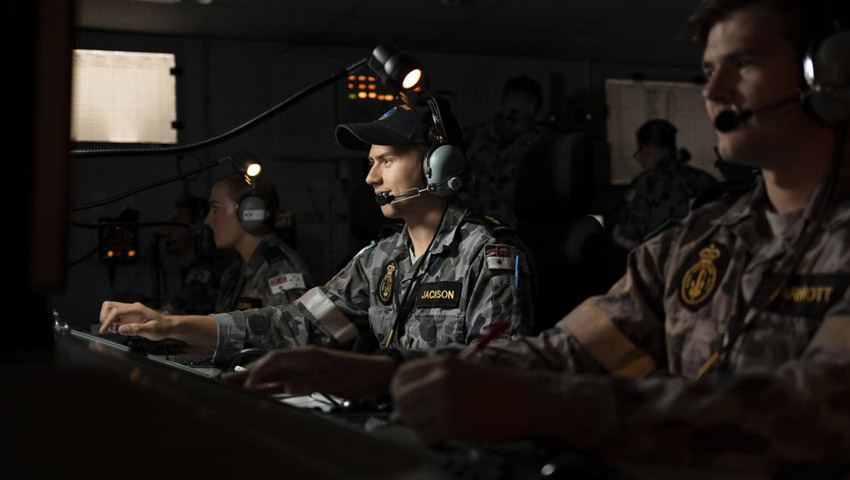
HMAS Parramatta has tested tactical and operational elements of sea combat during a week-long virtual naval warfare exercise.
The Royal Australian Navy has completed Fleet Synthetic Training – Joint 20/72 (FST-J)— a week-long exercise in which HMAS Parramatta tested various tactical and operational elements of sea combat in a virtual environment alongside the United States and Royal Canadian navies.
Using the Anzac Class frigate simulator at HMAS Watson in Sydney, HMAS Parramatta fought in real-time as part of an expeditionary strike group working in conjunction with a number of carrier strike groups to defeat an adversary force and secure friendly territory.
US and Canadian vessels joined the virtual exercise via simulators in Hawaii, mainland USA, Yokosuka in Japan, and Nova Scotia in Canada.
The US Marine Corps, Air Force, and Army, and the Royal Canadian Air Force also contributed simulated assets to the exercise.
Director of the Royal Australian Navy’s Fleet Force Generation Directorate, Captain Pete Bartlett, said FST-J helped strengthen interoperability between the three allied nations.
“It has provided us with the opportunity to test our combined training and tactics, share expertise and sharpen our complementary fighting capabilities,” Captain Bartlett said.
“To be able to exercise an Australian warship to her full fighting potential in a virtual domain alongside our American and Canadian partners is a fantastic way to refine our shared skills and complementary capabilities.”
Commander of the US Navy’s Carrier Strike Group Five, Rear Admiral Will Pennington added, “The complex virtual scenarios probe future security challenges in the Indo-Pacific region and allow us to leverage the collective experience of our joint and international team.
“Smart technology reduces costs and expands the problem set that we examine. It was especially useful this year in reducing risk within the COVID-19 environment.”
[Related: Allied interoperability on display with global F-35 exercises .]

Want to see more stories from trusted news sources?
Make Defence Connect a preferred news source on Google.
Click here to add Defence Connect as a preferred news source.