

 iscover
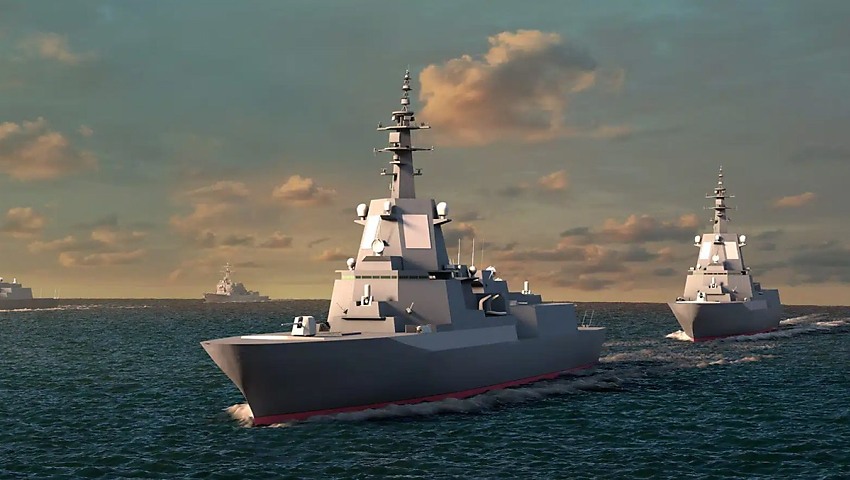
Australia’s selection of Japan’s evolved Mogami Class frigates as the backbone of the “enhanced lethality” of Royal Australian Navy’s surface fleet provides the perfect opportunity to build on this partnership by beginning planning to replace the Hobart Class destroyers.
From its inception, the Hobart Class destroyer program marked a significant leap in capability for the Royal Australian Navy (RAN), providing the fleet with its most advanced surface combatants to date.
Conceived in the early 2000s as part of the Air Warfare Destroyer project, the program aimed to replace the ageing Adelaide Class frigates with a platform capable of protecting naval and joint forces from sophisticated air and missile threats.
Drawing heavily on the Spanish F-100 design, the Hobart Class incorporated the Aegis Combat System with the AN/SPY-1D(V) radar, providing long-range surveillance and multilayered air defence, fast becoming the most advanced and capable warships ever operated by the Royal Australian Navy.
The construction began in 2009, led by ASC in Adelaide, but the program was beset by delays, cost overruns and early production quality issues. Nevertheless, the first ship, HMAS Hobart, was commissioned in 2017, followed by Brisbane in 2018 and Sydney in 2020. Once operational, the destroyers demonstrated formidable combat potential, particularly in missile defence, integrated operations with the US Navy, and as command platforms.
As Australia’s strategic environment grew more complex and contested, questions emerged about the longevity and scale of the Hobart Class. Though advanced, the three ships offer limited coverage across a vast maritime domain. By the early 2020s, Defence had begun scoping options for both mid-life upgrades and eventual replacement.
The 2023 Defence Strategic Review and subsequent 2024 Surface Combatant Fleet Review confirmed plans to upgrade the Hobarts with new sensors and effectors, including Tomahawk cruise missiles and improved air defence systems, extending their relevance into the 2030s.
At the same time, planning commenced for a future air warfare destroyer capability potentially forming part of a larger fleet of Tier 1 surface combatants. Options for potential consideration include an enlarged Aegis-equipped combatant, possibly based on US or allied designs, with greater missile capacity and integration with allied networks and sensors. This future fleet will need to operate in high-end contested environments, defend Australia’s northern approaches, and provide sea-based deterrence alongside the RAN’s future submarines.

Enter Australia’s recent announcement of its planned acquisition of the Japanese Maritime Self-Defense Force’s (JMSDF) evolved Mogami Class guided missile frigates as part of the AU$10 billion SEA 3000 General Purpose Frigate program, outlined in the Surface Combatant Fleet Review as part of the much-needed expansion of Australia’s surface combatant fleet.
This new relationship provides the perfect opportunity for Australia to expand this partnership with its Japanese partners and begin the development of the Hobart Class replacement with a vessel designed by Japan to provide full-spectrum, maritime dominance and an equal to China’s own Type 055 Renhai Class guided missile cruisers.
I am, of course, referring to the in-development Aegis System Equipped Vessel (ASEV) of which the JMSDF has plans to acquire two such vessels to provide national ballistic missile defence, maritime deterrence, anti-air warfare, anti-surface and anti-submarine warfare.
Stretching 190 metres in length and spanning 25 metres in width, the ASEV displaces around 12,000 tonnes at standard load – and possibly exceeds 14,000 tonnes when fully laden and incorporates the AN/SPY‑7 AESA radar mounted above the bridge in a configuration reminiscent of the Spanish F‑100 and Australia’s Hobart Class destroyers.
This radar, markedly advanced, boasts roughly five times the tracking capability of the older SPY‑1 system, enabling simultaneous detection of multiple ballistic missiles – even those on lofted trajectories. However, as with Australia’s own Hunter Class frigates, the best sensors in the world mean nothing when you have a small number of effectors with which to respond with.
Accordingly, the proposed ASEV’s armament is equally impressive: a total of 128 vertical launch system cells, split evenly fore and aft, each capable of launching a mix of Standard Missiles (SM‑3, SM‑6), Tomahawk cruise missiles, Japanese Type 12 anti‑ship missiles and other future payloads.
As strategic tensions rise across the Indo-Pacific, both Australia and Japan find themselves confronting increasingly sophisticated missile and air threats from potential peer adversaries. In this environment, Japan’s forthcoming Aegis System Equipped Vessel (ASEV) presents a timely and compelling opportunity not just as a cutting-edge warship but as a potential foundation for deeper strategic and industrial cooperation between the two nations.
For Australia, the need to replace and expand upon the three Hobart Class destroyers is becoming urgent. While the Hobarts have proven highly capable, their limited numbers and vertical launch cell capacity constrain the Navy’s ability to provide persistent air and missile defence across Australia’s vast maritime domain.
The ASEV, by contrast, is purpose built for ballistic missile defence and long-range air warfare. With 128 vertical launch cells, nearly three times the Hobart’s capacity, alongside the powerful SPY-7 radar and an upgraded Aegis Combat System, the ASEV is designed to operate in high-threat environments, protect national assets and integrate seamlessly with allied forces.
Additionally, despite the increase in firepower, the real world physical limitations exposed by the Royal Australian Navy’s efforts to have the three Hobarts effectively replace both the three Perth Class guided missile destroyers and the six Adelaide Class guided missile frigates necessitates a larger number of vessels to replace the Hobart fleet.
This fits perfectly in line with the government’s ambitions for a continuous naval shipbuilding industry, with increased economies of scale and a design finalised and ready to go alongside the Australian-built Mogamis set to take shape at the Henderson Shipyard in Western Australia.
Ultimately, the capabilities proposed as part of the ASEV are precisely the qualities Australia is seeking in a future destroyer.
By partnering with Japan on an “ASEV-A” variant tailored to Australian requirements, Canberra could optimally field a force of six (or more advanced destroyers) each capable of contributing to integrated regional missile defence, long-range strike and task group command and control.
The shared Aegis architecture would ensure interoperability with Japanese and American forces, while common missile types such as SM-6 and Tomahawk would further align force structures, enhancing the aggregated deterrence capabilities. The ASEV program is already well-developed, reducing technical risk and allowing faster delivery compared to a new design from scratch.
In essence, the ASEV represents more than a ship – it’s a strategic bridge. For Australia, joining Japan in this endeavour would not only enhance the Navy’s firepower and resilience but also signal a new era of allied collaboration, deterrence and defence self-reliance in the Indo-Pacific.

Want to see more stories from trusted news sources?
Make Defence Connect a preferred news source on Google.
Click here to add Defence Connect as a preferred news source.