

 iscover
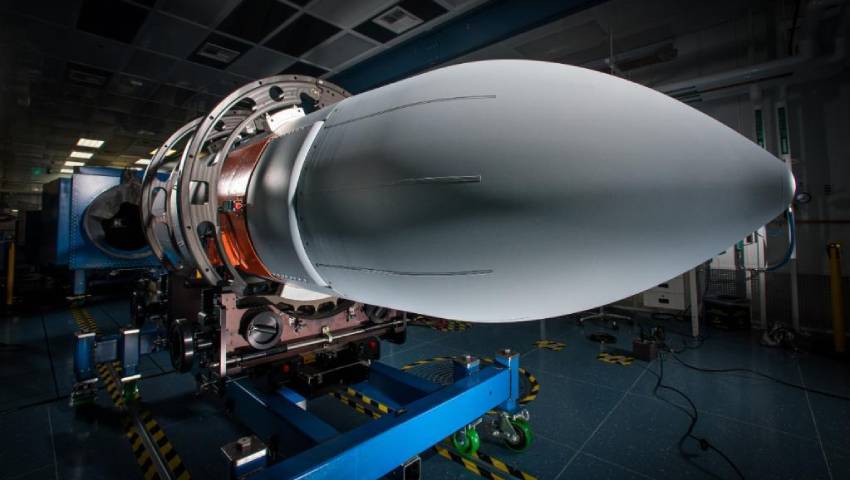
The US Navy has awarded Raytheon a US$403 million ($595 million) System Demonstration Test Articles (SDTA) contract for the company’s participation in the Next Generation Jammer-Mid Band.
Raytheon is expected to deliver the SDTA pods to the fleet once developmental and operational testing is complete – this contract award comes months following the announcement that the Next Generation Jammer-Mid Band (NGJ-MB) would begin testing with the US Navy.
Dan Theisen, director at Raytheon Electronic Warfare Systems, said, “These test assets will be used to show NGJ-MB is ready for operation. We’re at the stage where testing is essential. The test program is on target to meet Initial Operating Capability in 2022.”
Raytheon’s NGJ-MB architecture and design include the ability to operate at a significantly enhanced range, attack multiple targets simultaneously, and advanced jamming techniques. The technology can also be scaled to other missions and platforms.
Initially purchased alongside the more traditional Super Hornet variants to supplement Australia’s ageing fleet of classic Hornets and the diminished strike capability following the retirement of the F-111s, prior to the full integration of the Air Force’s 72 planned F-35s, IOC is expected to be delivered to the RAAF in the coming months.
Australia’s Growlers were part of a larger US Navy buy of 44 Super Hornets and Growlers in July 2014, with the first Australian EA-18G making its first flight in July 2015. All 12 of Australia's Growlers were formally welcomed to their home base at RAAF Amberley in 2017, providing air crews and pilots the opportunity to build familiarity and an understanding of the aircraft and its unique capabilities.
It is now expected that the Growlers of No. 6 Squadron RAAF will be capable of providing limited, force-level electronic warfare. This means that until final operating capability (FOC) is achieved, the aircraft will be largely limited to peacetime operations or responding to regional contingencies as needed.
Reaching FOC will require additional testing and broader integration with key ADF assets, particularly the Navy’s new Air Warfare Destroyers, Air Force’s E-7 Wedgetail AEWC aircraft and later F-35s and key ground assets of the Army to ensure that the ADF is developed into a full-spectrum, integrated force.

FOC for Australia’s Growlers is expected in 2022.

Want to see more stories from trusted news sources?
Make Defence Connect a preferred news source on Google.
Click here to add Defence Connect as a preferred news source.