

 iscover


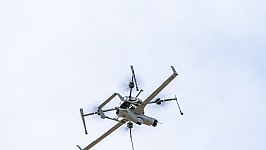


The Trusted Autonomous Systems Defence Collaborative Research Centre and Australian Army representatives have made significant advances in the nation’s trusted autonomy space, using artificial intelligence to ‘teach’ an unmanned aircraft to detect, decide and act during a mission.
Working collaboratively with industry partner Boeing Australia, the Trusted Autonomous Systems Defence CRC and Australian Army have successfully completed the successful flight test mission as part of a year-long project to further unmanned technologies.
Emily Hughes, director of Boeing Phantom Works International, said, “We’ve been developing machine learning techniques in the lab environment with multiple unmanned aircraft.
“We’ve effectively taught the unmanned systems to behave and learn using simulations, so they can detect a target in the real world, and then make a decision to act or react to the environment,” Hughes added.
This technology is particularly critical for intelligence, surveillance and reconnaissance missions.
The capability aims to address the Australia Defence Force’s need for rapid response, tactical route execution, along with improved location and identification capabilities in congested and contested environments.
Professor Jason Scholz, chief executive of the DCRC for Trusted Autonomous Systems, added, “What’s particularly critical for this project is the unmanned systems ability to achieve these objectives in missions where conditions are degraded or in a denied environment.
“Projects, such as the one we’ve pursued with Boeing, continues to grow our knowledge and understanding of artificial intelligence, and furthers the Australian government’s advancement in trusted autonomy.”

Want to see more stories from trusted news sources?
Make Defence Connect a preferred news source on Google.
Click here to add Defence Connect as a preferred news source.