

 iscover






After making a breakthrough in quantum computing and additively manufactured materials, two international research collaborations led by Australian universities have seen their projects extended by two years with funding from Defence’s Next Generation Technologies Fund (NGTF).
The Australian project teams will receive $2 million each to expand work under the Australia–US Multidisciplinary University Research Initiative (AUSMURI) program.
Griffith University, the University of Technology Sydney, and the University of New South Wales are creating knowledge that may one day enable error-tolerant quantum computers.
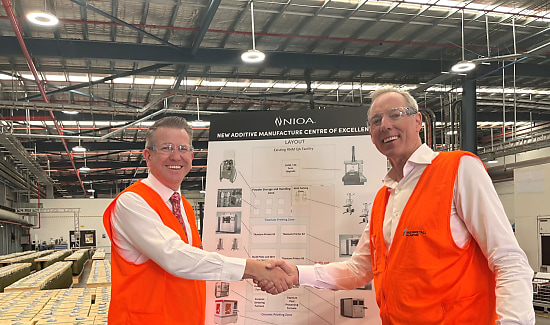
The University of Sydney is working to create more robust and available materials through additive manufacturing.
According to Dr David Kershaw, chief science engagement and impact division, through the project on Quantum Control Based on Real-time Environment Analysis by Spectator Qubits, Griffith University and its Australian partners have provided ground-breaking advances in quantum sensing and control in collaboration with the US team, led by Duke University.
“With their grant extension, by 2022 the project is expected to benefit the Quantum Assured Positioning, Navigation and Timing STaR Shot and may enhance distributed sensor arrays on battlefields of the future,” Dr Kershaw said.
“The University of Sydney’s project on Microstructure Control in Metal Additive Manufacturing generated new scientific knowledge and has been instrumental in the establishment of a world-class additive-manufacturing facility in Australia.”
The project’s outcomes are expected to support rapid in-field repairs of aerospace and land vehicle structures and at-sea repairs of maritime vessels. The University of Sydney is collaborating with another group of high-profile US universities, led by the University of Tennessee.
“The grant extensions demonstrate the research strength of Australian universities in the international arena and support Australian researchers collaborating with global innovation networks to address high-priority topics for defence capability,” Dr Kershaw said.
Both projects have significant Defence and wider commercial benefits.
The NGTF seeks research and development proposals from Australian universities, small to medium enterprises, publicly funded research agencies and defence industry to support defence capability, investing a total of $25 million over the nine years of the AUSMURI program.
[Related: ADA awarded contract to supply NZDF uniforms]
Want to see more stories from trusted news sources?
Make Defence Connect a preferred news source on Google.
Click here to add Defence Connect as a preferred news source.