

 iscover




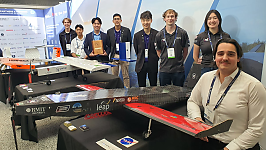

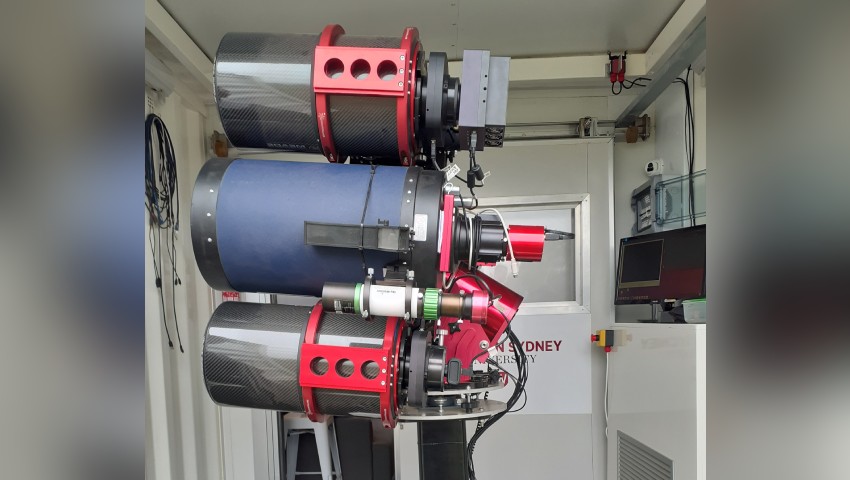
Thales Australia, in partnership with the International Centre for Neuromorphic Systems at Western Sydney University (WSU ICNS), has received grant funding from the Australian government’s Moon to Mars initiative to help develop new Australian technologies for potential use on NASA’s Moon to Mars mission.
Thales Australia and the WSU ICNS, in collaboration with Thales’ subsidiary and international joint venture, Thales Alenia Space, aims to use the grant to leverage the European Robotic Orbital Support Services (EROSS+) program.
The Neuromorphic Event Based Vision Sensor (EBVS) capability will be tested with Thales’ Spacecraft and Planetary Imaging by Camera Model (SPICAM). The research team will also assess the feasibility of neuromorphic sensors for potential application in complex in-orbit processes including spacecraft docking, refuelling and payload transfer or replacement.
The project aims to focus on the performance gains achieved using EBVS technology over existing sensors in support of orbital support service activities in high contrast visual environments. It will also determine performance gains for combined use of EBVS and existing sensors through sensor fusion.
According to Matt Dawson, director space, Thales Australia and New Zealand, the company's long history to the creation of sovereign capabilities in Australia has bolstered local research institutions and SMEs.
"We are proud to be working with Western Sydney University’s neuromorphic laboratory on this unique and sovereign sensor paradigm, which has performance characteristics that exceed traditional optic sensor technology, and we are excited about its potential application in NASA’s Moon to Mars missions," Dawson said.
"We have a long history of developing new and high-quality capabilities in partnership with local research institutions and our SME supply partners with many now exporting around the world."
The project supports the commitments made by Thales Australia’s Strategic Statement of Intent signed with the Australian Space Agency in December 2019, and is indicative of potential future export opportunities available to Australian businesses and research institutions through Thales’ global supply chain.
Professor Andre van Schaik, director of WSU ICNS, added that the opportunity to work with Thales to develop a new type of space-based capability is exactly the type of research we are focused on.
"We are looking to demonstrate the utility and efficiency of neuromorphic systems while advancing our knowledge and understanding of field," van Schaik said.
"This project will continue our broadening partnership with Thales and aims to deliver enduring impact in the emerging field of space based operations.
"The collaboration will enhance the skills and capabilities of both organisations and enrich the local ecosystem with new understanding of how to operate in the challenging space environment."
[Related: Macquarie to launch sovereign cyber security centre]
Want to see more stories from trusted news sources?
Make Defence Connect a preferred news source on Google.
Click here to add Defence Connect as a preferred news source.