

 iscover




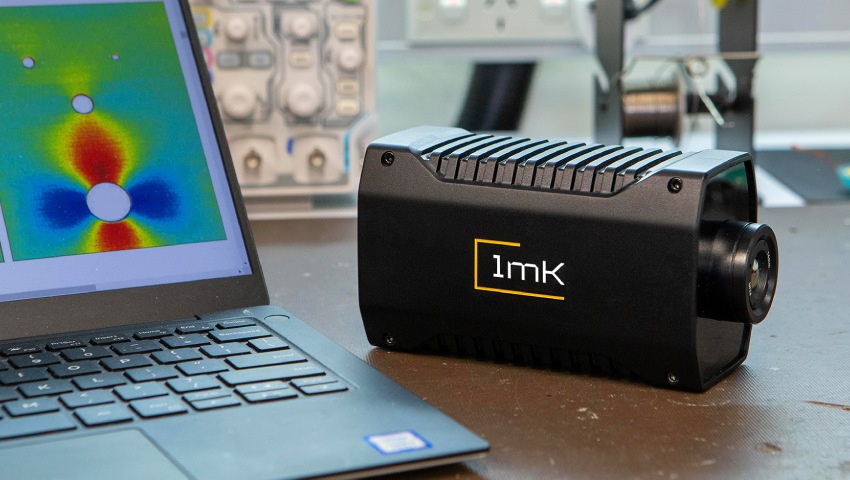
The LTS-640V is a digital imaging machine little bigger than a DSLR camera that provides real-time imagery that helps quantify material stress and detect fatigue cracks that could prove dangerous if unchecked.
The Australian invention is the first of its kind, providing real time fusion of stress and visible spectrum imaging - in effect merging the visible with the invisible.
The capability it provides will allow for a potentially more streamlined certification process, and should help eliminate some of the surprises that can occur during testing of a new aircraft structure.
The technology was developed in collaboration with scientists at the Australian Department of Defence where a prototype of this technology has helped support sustainment of the F/A-18 Classic Hornet, and more recently provided Lockheed Martin Aeronautics with valuable new information during structural certification testing of the F-35 Joint Strike Fighter.
The LTS-640V is designed to be used during the certification stage before an aircraft is approved for commercial or military use.
According to a spokesperson for the Department of Defence, the inspection approach is based on the ‘thermoelastic effect’.
"Put simply, when you squash something it heats up, when you stretch something it cools down,” the DoD spokesperson said.
“Think of magic spray which is often used to treat sports injuries – it’s the stretching or expansion of the gas as it leaves the aerosol can that provides the cooling effect.
“Unlike magic spray, however, the temperature changes we’re dealing with are tiny, thousandths of a degree, but we can still detect them, and quite easily using the advanced algorithms at the core of this technology.”
This capability has a significant role to play in helping aircraft designers and operators better understand how an airframe performs under load.
“The technology can improve our ability to quantify stresses, particularly in structurally critical areas where traditional technologies have very limited capability,” the DoD spokesperson added.
The design team at 1MILLIKELVIN have transformed this groundbreaking capability into a robust commercial product with with $275,000 of grant funding.
The new technology has been used to support the Classic Hornet and has demonstrated how it can improve the way designers validate modelling of complex airframe components in the F-35 full scale durability test program, according to Kheang Khauv, managing director of 1 MILLIKELVIN, manufacturer of the LTS-640V technology.
“We are looking to help streamline and improve structural validation processes across the global defence and aeronautics industries,” Khauv said.
“We are proud our advanced technology is making a contribution to Defence capability.”
Potential applications of the technology extend well beyond aviation, with potential customers including a wide range of industries both in Australia and around the world.
Total grants so far are $75,000 from the Victorian government (Boost your business program), $150,000 from the Advanced Manufacturing Growth Centre and another $50,000 from the Defence Science Institute, which is part of the Australian Defence Science and Universities Network Australian Defence Science and Universities Network.
[Related: Lockheed Martin Australia bolsters JP 9102 team]
Want to see more stories from trusted news sources?
Make Defence Connect a preferred news source on Google.
Click here to add Defence Connect as a preferred news source.