

 iscover
The Australian Army will be reshaped for long-range strike capability, according to comments made by the Australian government during the release of the Defence Strategic Review.
The Defence Strategic Review (DSR) was unveiled by Prime Minister Anthony Albanese, Defence Minister Richard Marles, and Defence Industry Minister Pat Conroy on Monday, 24 April.
Under the DSR, the Australian Army must be optimised for “littoral manoeuvre operations by sea, land, and air from Australia, with enhanced long-range fires”.
“This review, and the government’s response to it, does provide for a reshaping of the Australian Army which gives us a much greater strike capability and a much longer-range strike capability, but also a much greater ability to operate in a littoral environment,” Defence Minister Marles said.
“Ultimately, what the DSR recommends, and what the government is going to put in place, will give rise to an army with a much more focused mission with a much more enhanced capability.”
The report announces major changes to the $27 billion Land 400 Phase 3 project, with the number of new infantry fighting vehicles more than halved from 450 to 129. Indicated in the report, those vehicles will provide one mechanised battalion for littoral manoeuvre, training, repair, and attrition stock.
The ministers also announced the cancellation of a second regiment of 30 self-propelled howitzer artillery under Land 8116 Phase 2 because they do not provide the required range or lethality, according to the report. The first 30 howitzers that have already been constructed by Hanwha will not be cancelled.
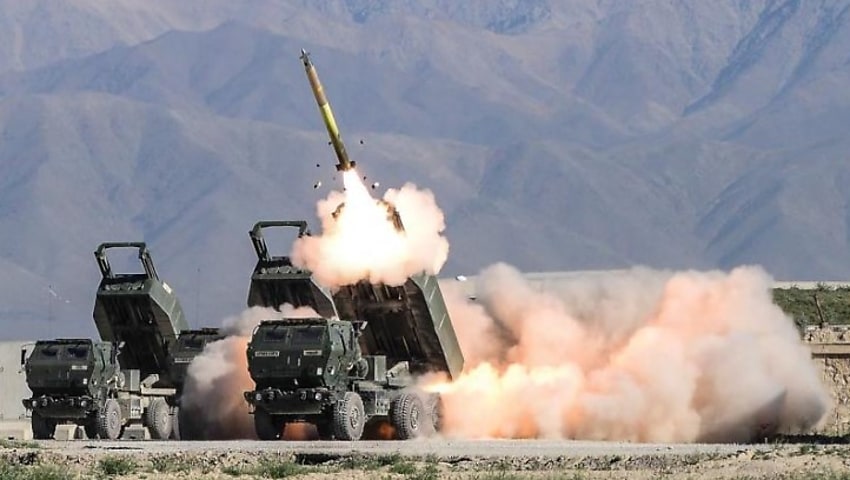
That funding will be used for the acquisition of additional High Mobility Artillery Rocket System (HIMARS) and rapid acquisition of precision strike missiles.

“The money and resources are freed up from that endeavor, and a cancellation of a second regiment of Self Propelled Howitzers will fund the acceleration and expansion of High Mobility Artillery Rocket System that have been used so effectively in the Ukraine conflict,” said Defence Industry Minister Pat Conroy.
“(We need to) expand and accelerate the acquisition of land-based maritime strike to give the Australian Army significant range and projection.
“At the end of this process, we’ll go from an Australian Army, where the maximum range of the weapons is 40 kilometres, to be able to fire missiles initially over a range of 300 kilometres and with the acquisition of the precision strike missile ranges in excess of 500 kilometres.
“This is about giving the Australian Army the firepower and mobility it needs into the future.”
The report has also recommended that Australia rapidly accelerate and expand the Army’s littoral manoeuvre vessels including medium and heavy landing craft under LAND 8710 Phases 1 and 2.
Medium and heavy landing craft are required, otherwise, the Army will have limited major land capabilities that it can project offshore.
Earlier this year, XTEK Group chairman and industry insider Mark Stevens said the DSR should be viewed as completing a holistic military approach, not as a “who won and who lost” argument.

Robert Dougherty
Want to see more stories from trusted news sources?
Make Defence Connect a preferred news source on Google.
Click here to add Defence Connect as a preferred news source.