

 iscover
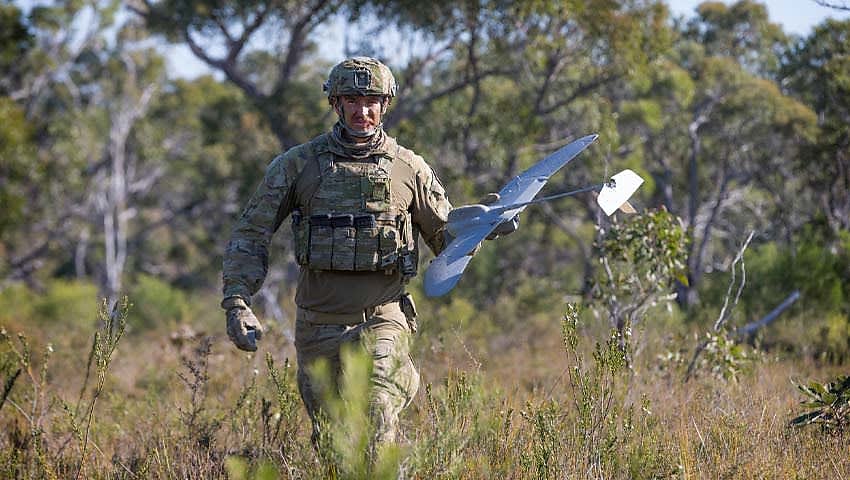
The Melbourne-based firm’s sensor technology has been selected for integration on the ADF’s next-generation tactical UAS platforms.
Defence has confirmed that Ascent Vision Technologies (AVT) Australia has been selected to supply its advanced CM234 Spitfire camera gimbal for incorporation into the Australian Army’s future tactical unmanned aerial systems (UAS) as part of the Tactical UAS Replacement and Enhancement Project (LAND 129 Phase 3).
The sensor technology aims to enhance intelligence, surveillance and reconnaissance (ISR) capability by leveraging an imaging system that uses electro-optical, short wave and medium wave infrared cameras, along with laser range finding and target designation technology.
Director General Army Aviation Systems, Brigadier James Allen, described the technology as a “generational leap in optical camera sensor and image stabilisation technology”.
“The Spitfire camera gimbal is an extremely lightweight sensor package that provides a day-and-night surveillance and reconnaissance capability on the installed aircraft, which will significantly boost Army’s tactical UAS capabilities,” BRIG Allen said.
“UAS are a key component of Army’s ISR capability, with some smaller unmanned systems used last year on Operation Bushfire Assist.”
According to Assistant Secretary Defence Capability and Innovation, Andrew Hodgkinson, the Spitfire camera sensor technology demonstrates Australia’s growing sovereign industrial capability, supported by government funding via the Defence Innovation Hub.
“This Australian invention will allow capabilities traditionally reserved for manned aviation systems to be introduced on tactical unmanned aerial systems,” Hodgkinson observed.
The technology is set to support UAS platforms developed by either Insitu Pacific Limited or Textron Systems Australia, which have been selected as the final two companies in the tender evaluation process for LAND 129 Phase 3.
The government is expected to announce its final decision later this year.
[Related: AVT Australia wins ‘eye in the sky’ contract for Australian Army]

Want to see more stories from trusted news sources?
Make Defence Connect a preferred news source on Google.
Click here to add Defence Connect as a preferred news source.