

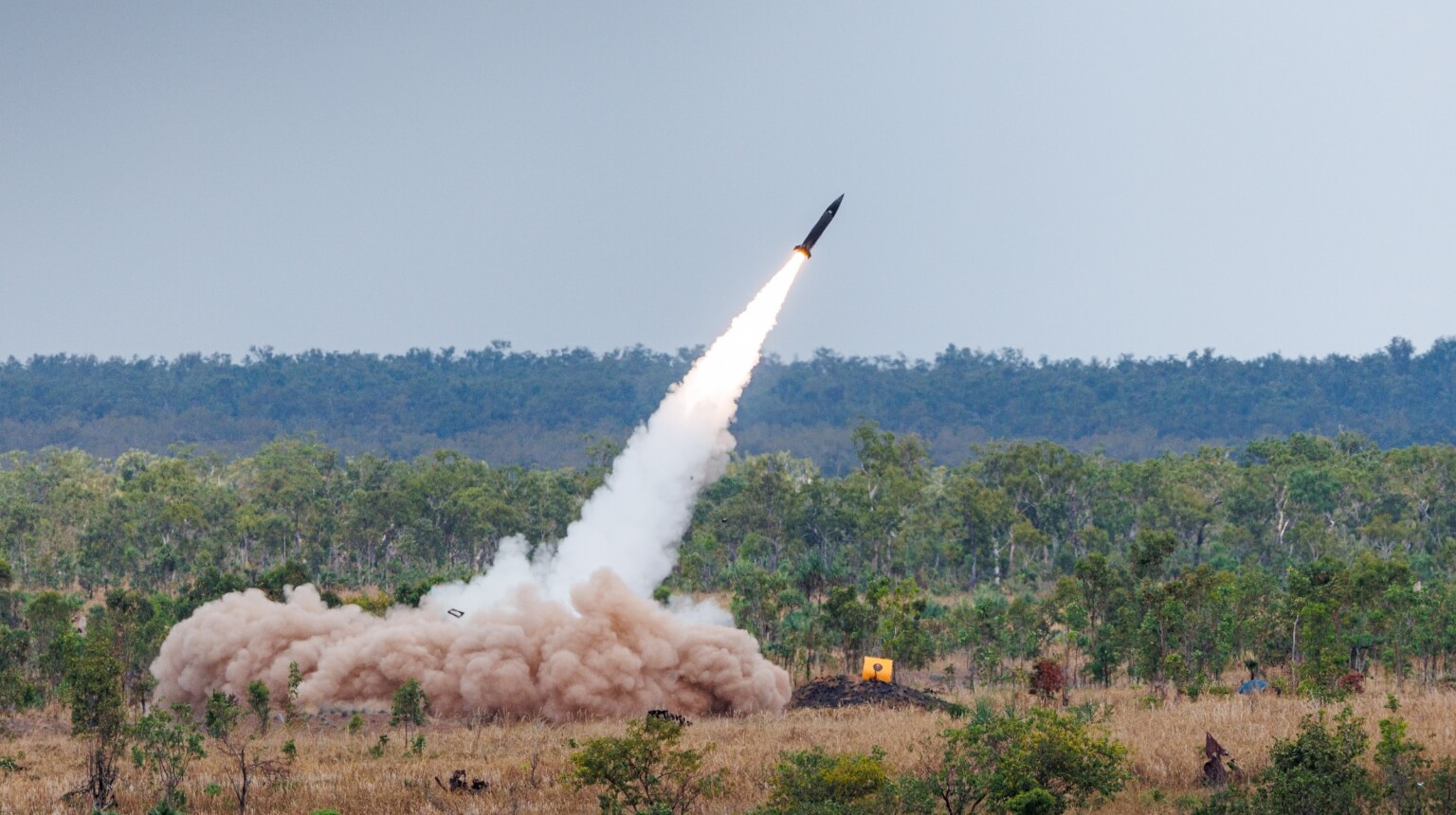
The acquisition of High Mobility Artillery Rocket Systems (HIMARS) and their associated Precision Strike Missiles (PrSM) represents a generational shift for the Australian Defence Force.
These systems give the Army and, by extension, the joint force, the capacity to hold adversaries at risk across sea and land, providing a flexible, survivable and interoperable layer of deterrence.
For decades, Australian artillery was limited to ranges of around 30 kilometres, provided by M777 howitzers. HIMARS changes the equation entirely. With Guided Multiple Launch Rocket System (GMLRS) rounds, it can strike targets beyond 70 kilometres, and with PrSM it can reach 499+ kilometres.
Later increments of PrSM are expected to exceed 1,000 kilometres, with the added ability to strike moving maritime targets. This leap in range and accuracy fundamentally alters how Australia can defend its northern approaches and deny an adversary freedom of manoeuvre across choke points and archipelagos.
The significance lies not only in range but also in speed and survivability. The PrSM fired during Exercise Talisman Sabre 2025 travelled at more than three times the speed of sound, arriving on target within minutes. For adversary ships or mobile missile launchers, this compresses the decision cycle to the point where evasion becomes almost impossible to defeat PrSM.
In deterrence terms, it forces any potential adversary to question whether approaching Australian waters is worth the risk. For Australia, this capability buys strategic depth, turning the northern approaches into a defensive buffer zone.
Josh Woodward, Business Development Analyst, Missiles and Fire Control at Lockheed Martin Australia, explains the importance of the HIMARS capability in shaping Australia’s maritime security.
“Until recently, the Army was stuck in a 30–40-kilometre mindset – the M777 was the norm (maybe 45km with special charges). HIMARS with GMLRS now reaches 70+ km and PrSM pushes that envelope to roughly 500km – a genuine quantum leap in reach for the Australian Army,” Woodward says.
Equally important is mobility. HIMARS can be loaded onto a C-130, flown to austere airstrips and launched within minutes. This means that batteries can be dispersed across northern Australia or even further afield, rapidly repositioning to complicate adversary targeting.
At Talisman Sabre, HIMARS demonstrates this agility with a live-fire deployment from Christmas Island. The message is clear: long-range fires will not be tied to fixed bases but will be unpredictable, survivable and capable of striking from unexpected directions.
Woodward adds, “At Mount Bundey in the NT, Australia fired a PrSM from an Australian HIMARS for the first time — striking a target over 300 km away. It was a clear step change for the Army and for Australia’s ability to project power.”
At Mount Bundey in the NT, Australia fired a PrSM from an Australian HIMARS for the first time — striking a target over 300 km away. It was a clear step change for the Army and for Australia’s ability to project power.”
- Josh Woodward
This mobility and range dovetail with Australia’s pseudo “echidna strategy” – making the continent and its northern maritime approaches too prickly to approach without severe cost. Littoral fires extend that logic into the maritime domain. By positioning launchers along likely approaches and choke points, Australia can create overlapping fields of fire that deny adversaries safe transit.
Whether deterring incursions into the Torres Strait, the Timor Sea or further north in the archipelagos of south-east Asia, HIMARS provides the reach and flexibility to shape the battlespace well before adversaries can threaten the Australian mainland.
Integration with allies further strengthens this capability. Australia is the only nation outside the United States to field the same US-configured Advanced Field Artillery Tactical Data System fire control. This allows seamless mission sharing with US forces, effectively making Australian and US batteries interchangeable. Ammunition, maintenance and targeting data can flow across the alliance without friction, turning national forces into a single extended strike network.
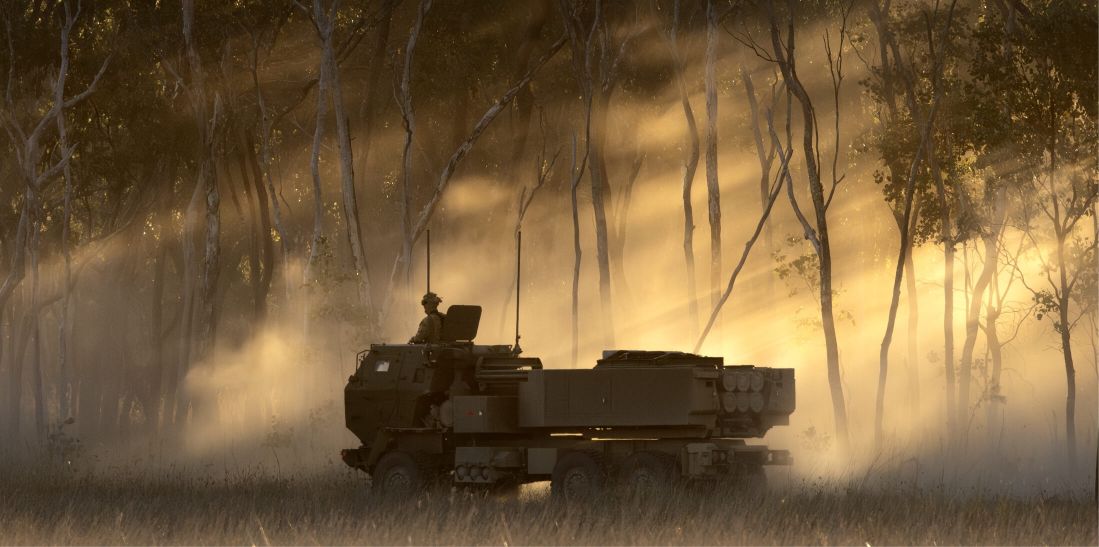
“Australia is the only country outside the US with the American-configured Army Field Artillery Tactical Data System – giving us the exact same command-and-control system as the US Army and Marines,” Woodward tells Defence Connect.
For a middle power like Australia, that interoperability magnifies influence and ensures access to the latest technology upgrades.
Sceptics may question whether rocket artillery can replace traditional cannon systems. The reality is that both have roles. Cannon artillery provides massed fires for close battle, while HIMARS delivers precision at long range. Together, they offer flexibility across the spectrum of operations.
Where HIMARS is unique is in its ability to reach across the littoral, striking ships at sea or infrastructure ashore, complementing naval strike missiles and air-launched weapons. It is not a substitute for the fleet but a multiplier of its effectiveness.
Domestic industry benefits are another key element. Australia is not merely a customer but a co-developer of PrSM. More than $450 million has been invested in the program, with local firms such as AW Bell, Moog Australia and Marand already engaged in manufacturing components.
By the end of the decade, PrSM will be produced in Australia – the only site outside the continental United States. This sovereign manufacturing base strengthens supply chain resilience and embeds high-value skills in the defence industrial workforce.
Importantly, sustainment will also be localised. Engines, tyres, lubricants and other critical elements will be sourced and maintained within Australia. Over time, this ensures that the system can be supported even during prolonged conflict when international supply chains may be contested. Reliable sustainment is the difference between a fleet of launchers on paper and a fleet ready to fight.
The broader strategic effect of littoral long-range fires is deterrence through uncertainty. Adversaries must assume that Australian HIMARS could be hidden along any stretch of coastline or on any northern island, ready to deliver precision strikes at speed. This forces them to spread resources thin, alters their risk calculus and provides Australia with options to escalate or de-escalate as circumstances demand.
In an era where grey zone tactics and coercive maritime manoeuvres are becoming the norm, the ability to respond with precision, flexibility and reach is vital. HIMARS and PrSM give Australia exactly that. They transform the Army into a maritime denial force, integrate seamlessly with allies and contribute to a layered defence posture that complicates any adversary’s planning.
Woodward adds, “HIMARS is uniquely C-130 transportable – launcher, fuel and missiles move as one organic unit, ready to go into any austere strip. That gives us true tactical agility: disperse, surge and press fires downrange at speed. Combined with PrSM (Increment 2’s multimode seeker and >400km reach), it delivers a fast, high-diving, wide-area strike and real deterrence.”
For Australia, littorally focused, manoeuvrable long-range fires are not just another capability. They are the connective tissue between land, sea and air power, ensuring that the nation can deter, defend and, if necessary, strike decisively to safeguard its maritime approaches.