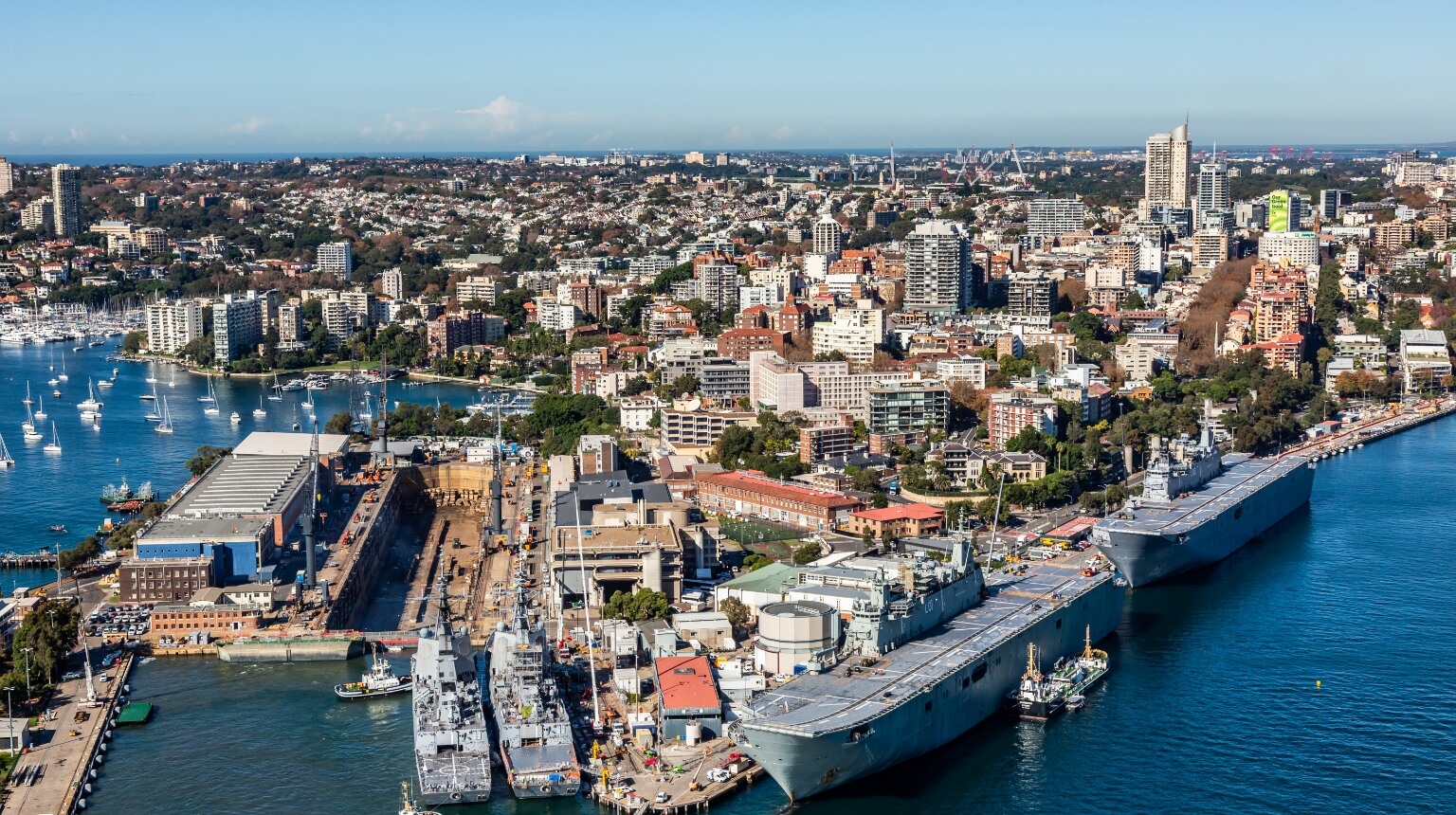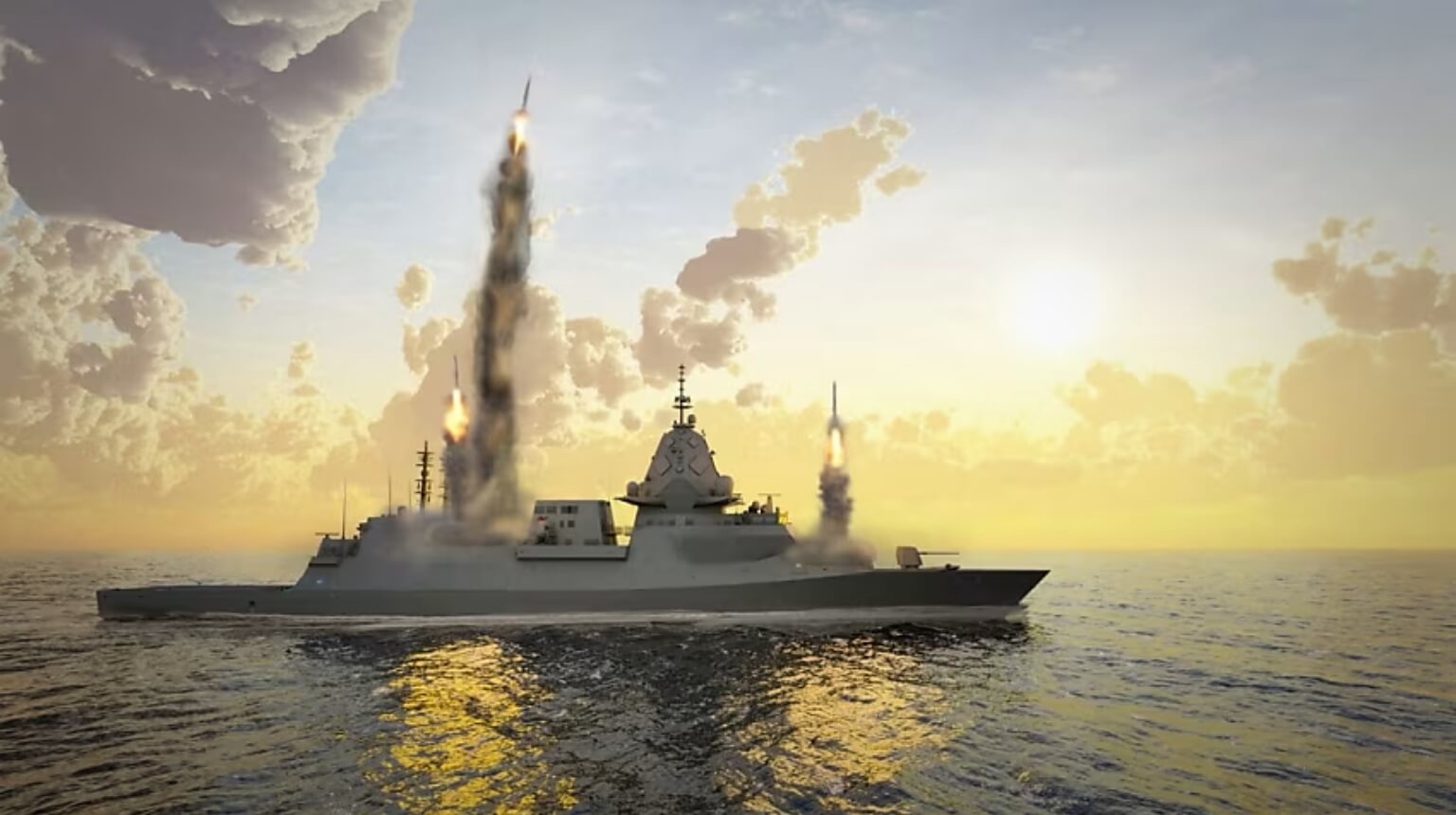


From the ancient seafaring traditions of First Nations peoples, who navigated coastal waters and traded across Torres Strait and northern seas for millennia, to the arrival of European settlers who relied on maritime routes for survival and connection, the ocean has shaped Australia’s story.
Economically, the sea underpins the nation’s wealth. More than 99 per cent of Australia’s trade by volume moves by sea, while offshore energy production, fisheries and burgeoning sectors such as marine biotechnology and seabed resources contribute billions to national income.
Strategically, Australia’s maritime geography presents both opportunity and vulnerability.
As the global balance of power shifts away from Europe towards the Indo-Pacific, the country’s security and economic resilience will increasingly depend on free and secure sea lanes stretching across the region.
In the face of this increasingly contested region where great power competition is reshaping the balance of power and influence, protecting our maritime sovereignty will require a precise mix of mass, innovation, flexibility and industrial resilience.
At the forefront of this novel way of thinking about Australia’s national and maritime security is the firebrand American defence and technology company Anduril, the brainchild of Silicon Valley rising star Palmer Luckey.
Enter Ghost Shark
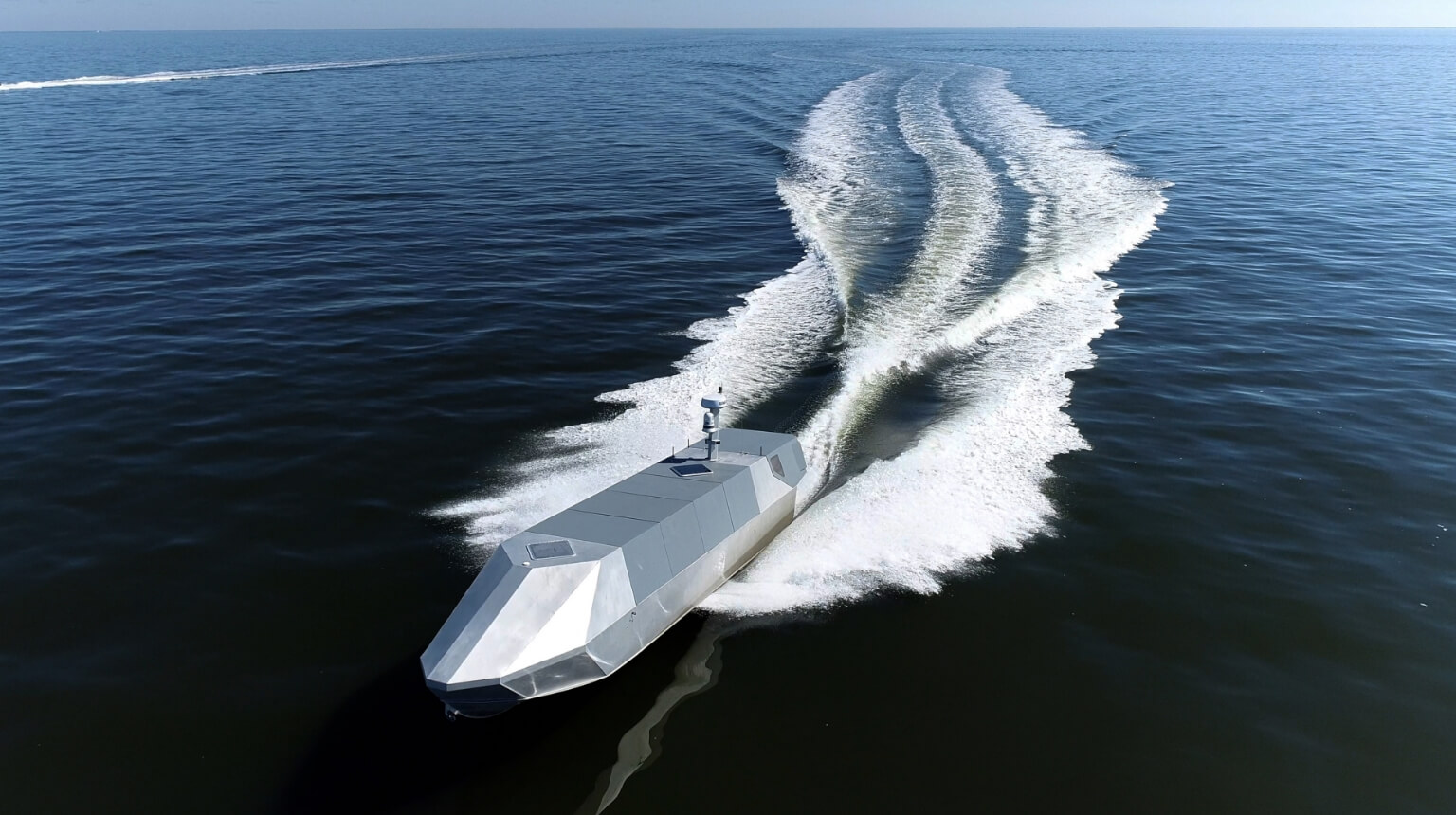
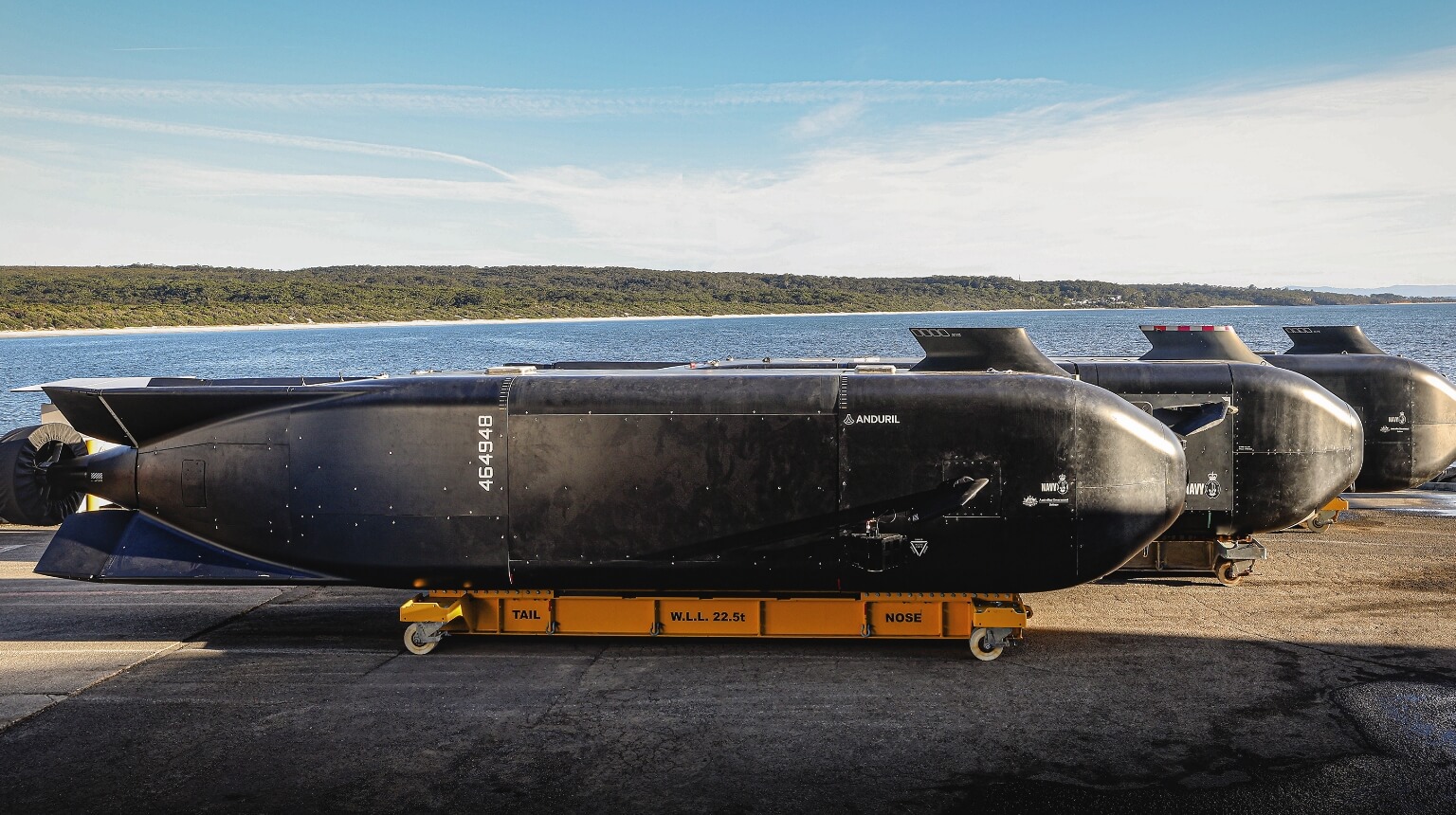
The company recently celebrated a milestone contract with the Royal Australian Navy, worth AU$1.7 billion (US$1.12 billion), to develop and field a fleet of highly advanced, Australian-designed and built extra-large autonomous undersea vehicles, the Ghost Shark.
While important for the Royal Australian Navy, it is worth noting what a milestone this is for the nation, with Ghost Shark the first ever Australian-designed and built military submarine.
Father of both the Royal Australian Air Force’s MQ-28A Ghost Bat and the Ghost Shark, Shane Arnott explains the importance of the maritime domain in Australia’s future security requirements, specifically the undersea domain.
“Across all of the domains, we are seeing our adversaries either at parity or near parity in terms of the capabilities they’re fielding, only the undersea environment remains completely uncontested, we can’t let our lead diminish,” Arnott tells Defence Connect at the company’s headquarters in Costa Mesa, California.
Across all of the domains, we are seeing our adversaries either at parity or near parity in terms of the capabilities they’re fielding, only the undersea environment remains completely uncontested, we can’t let our lead diminish.”
- Shane Arnott
Arnott adds, “Ghost Shark and its inbuilt autonomous capabilities will provide the Royal Australian Navy with a distinct, asymmetric capability, complementing and enhancing the nation’s conventionally armed, nuclear-powered submarine fleet when they begin arriving.”
Designed to be a truly multi-mission, modular and tailored platform, Ghost Shark draws on the company’s commercial experience through its Dive family of large autonomous undersea vehicles, leveraging economies of industrial scale and commercial supply chains in a break from the boutique approach typical of defence programs of the same scale and complexity.
“We have designed Ghost Shark from the ground up to be a modular, multi-mission system, with a truly open systems architecture which means we can integrate a host of payloads, both from Anduril and third-party sensors and effectors, that just opens up a host of options for enhancing deterrence,” Arnott says.
For the Royal Australian Navy, this means that a single Ghost Shark can deploy with a range of mission-specific packages, from intelligence, surveillance and reconnaissance sensors, through to a host of strike capabilities.
This modularity also serves to futureproof the capability from the very base of the design, allowing for advances in sensor, effector, computing and battery technology to be rapidly prototyped and incorporated into the platform, a term Anduril Australia’s executive chairman and chief executive, David Goodrich OAM, refers to as “evergreening”.
Goodrich details the importance of evergreening in the Ghost Shark program and the company’s confidence in its technology, telling Defence Connect, “We have embedded this concept of ‘evergreening’ into the very core of our partnership with the Commonwealth and is something that differentiates Anduril from others in the industry. It means, without additional cost, no extra contracting, we keep the platform relevant, survivable and lethal in real time.”
This, in essence, keeps the platform in a constant state of evolution and is emblematic of Anduril’s DNA at its core, true to its disruptive, Silicon Valley roots, something that in the world of Defence can be quite jarring and confronting if one is not prepared.
Goodrich says, “Evergreening is critical if we want to stay ahead of our ‘pacing’ threats in the Indo-Pacific, but it is not without its risk and that can be confronting for Defence. The nature of the competition we face means we must move quickly, and sometimes break things, but the whole way through we are learning.”
However, innovation will only get us so far.
IKEA of defence industry and building combat mass
Combat mass is the second part of the equation which is becoming increasingly important for Australia and our partners. In order to deliver this combat mass, we need to have sustainable, competitive industrial mass.
This represents the second disruptive point of difference that Anduril brings to Australia and the allied defence industrial base, through a host of novel (at least from the perspective of defence industry) ideas.
Anduril co-founder and executive chairman, Matt Grimm, explains to Defence Connect, “Our focus is on industrial partnerships and flexibility, we want to support sovereign industrial capabilities in our partner nations, after all, you go to war with the industrial base you have, not the one you want.”
“What we have done with Ghost Shark, with the Barracuda series of cruise missiles, Fury and a range of our systems is to design them to be built, in mass, from a diverse range of suppliers, drawing on existing, commercial supply chains; that is how we build mass,” Grimm adds.
Grimm’s colleague, co-founder and CEO of Anduril, Brian Schimpf, expanded on these comments, saying, “We are committed to supporting the localisation of defence industrial capacity amongst our partner nations and that opens a host of opportunities both locally and for exports, what we would like to see is nations begin to view the opportunities inherent with our model as an extension of statecraft.”
This becomes even more important for Australia when one considers that for much of the past three decades, Australia has relied heavily on imported goods and global supply chains, confident that that the US would uphold the global “rules-based order”.
But the world has changed. Strategic competition, disrupted trade routes and growing instability in the Indo-Pacific have exposed the fragility of that assumption.
Or as Anduril’s founder, Palmer Luckey says, “China is openly building a fundamentally offensive military. Our advantage is rapidly industrialising to build mass and the opportunities that provides, that is our strength.”
Stephen Kuper visited the company headquarters in Costa Mesa, California, courtesy of Anduril.